In The News

Why Claire’s is closing 700 US stores, mulling liquidation

Published Wednesday, August 20, 2025

Claire’s, once a go-to for middle school shoppers, is back in bankruptcy for the second time in seven years and preparing to close 700 stores — possibly all 1,500 in North America — if a buyer doesn’t step up. Despite surviving the pandemic, the retailer has struggled with declining mall traffic, rising tariffs, failed pricing and inventory strategies, and growing competition from brands like Shein, Ulta, and Five Below. With nearly $691 million in debt and months of unsuccessful sale efforts, experts say a turnaround will be difficult, though bankruptcy could offer a slim chance for reinvention.

Retail sales make strong comeback in July

Published Monday, August 18, 2025

Retail sales rebounded sharply in July as shoppers jumped on summer promotions and stocked up before new tariffs hit. Core retail sales (excluding restaurants, autos, and gas) climbed 1.55% from June and surged nearly 6% year over year, marking a strong turnaround from June’s decline. Gains were seen in nearly every category, led by sporting goods, hobbies, and books, while only electronics and appliances dipped slightly. Digital products saw the biggest annual boost, soaring 25%. Industry leaders point to successful sales events and tariff-driven buying as key drivers — though rising prices for everyday goods hint at growing inflationary pressures.

Startup Offers AI-Driven Access to Commercial Property Details at Scale

Published Friday, August 15, 2025

Hantz Févry, Co-Founder and CEO of Geolava, is tackling one of commercial real estate’s biggest challenges: its lack of digital connectivity. Geolava uses satellite imagery, LiDAR scans, thermal sensors, drone footage, and zoning data to create a comprehensive digital profile of properties — revealing details from traffic flow to hidden roof defects. This data is processed through Geolava’s AI platform, enabling predictive modeling and customizable decision-making tools for investors and property managers. The goal isn’t to replace human inspectors, but to provide real-time, scalable property intelligence that can democratize CRE investment. With over 118 companies already subscribed, Geolava is expanding both its capabilities and geographic reach.

Claire’s files for bankruptcy; stores remain open

Published Wednesday, August 13, 2025

Claire’s Holdings has filed for Chapter 11 bankruptcy protection for the second time in seven years, citing heavy debt, rising tariffs, and growing competition from online retailers like Temu and Shein. The tween and teen accessories chain — operating Claire’s and Icing stores — will keep its North American stores open during restructuring while exploring a potential sale. Claire’s has a $500 million loan due in 2026, skipped rent at some locations this summer, and faces mounting pressure from shifting consumer trends and newer retail competitors. The retailer also plans insolvency proceedings in Canada as it seeks strategic and financial partners to secure its future.

How edge AI is transforming retail operations

Published Friday, August 8, 2025

Retail is undergoing a once-in-a-century transformation powered by edge AI — technology that processes data right in-store, in real time, to make operations smarter, faster, and more customer-focused. From pinpoint inventory tracking and frictionless self-checkout to predictive maintenance that prevents costly downtime, edge AI is solving some of retail’s biggest pain points while creating opportunities for growth.

It’s not just about automation — it’s about empowering employees, delivering hyper-personalized shopping experiences, and using real-time insights to adapt instantly to customer needs. With solutions like the Dell AI Factory with NVIDIA, retailers can scale AI capabilities quickly, enhance efficiency, and boost ROI, positioning themselves for long-term success in an increasingly competitive market.

Mid-Year Recap: Retailers continue to expand despite challenges

Published Wednesday, August 6, 2025

Despite a turbulent year for retail marked by bankruptcies, inflation pressures, and store closures from names like Party City, Joann, and Rite Aid, the sector is far from collapsing. Many brands — including Burlington, Five Below, Aldi, and Barnes & Noble — are actively expanding, while a wave of digitally native companies is moving into brick-and-mortar.

Fresh faces like Eastside Golf, Oofos, Perigold, Princess Polly, and Rocksbox are opening physical stores, bringing new energy and niche offerings to malls and shopping districts. Even Warby Parker, a pioneer in blending online and offline retail, hit a milestone with its 300th store. In short, while some giants fade, the retail landscape is evolving — and in many cases, growing.

Bed Bath & Beyond Home reveals opening date, location; will accept old coupons

Published Tuesday, August 5, 2025

Bed Bath & Beyond is making a stylish comeback — and it’s bringing its famous coupons with it. Now part of The Brand House Collective (formerly Kirkland’s Inc.), the retailer will debut its first Bed Bath & Beyond Home store on August 8 in Nashville. Shoppers can expect the iconic blue coupons at the door — and yes, they’ll even honor old ones. The first 25 customers will score a free queen-size memory foam mattress valued at $226.99.

CEO Amy Sullivan calls it a “fresh start” for a brand beloved by families, with a renewed focus on great products for every room and every budget. This relaunch is part of the company’s bigger transformation, which includes a new ticker symbol — TBHC — and a portfolio boasting more than 300 stores across 35 states.

Miami Office Market Takes Step Back As Demand Wanes

Published Friday, August 1, 2025
ChatGPT said:

After a strong start to 2025, Miami’s office leasing market lost steam in Q2, with new leases dropping to 454K SF—over 100K SF less than Q1. Total leasing activity, including renewals, also fell sharply, signaling a return to the slower pace seen in 2024. The post-pandemic relocation boom has cooled, and with fewer national companies moving in, demand has softened slightly.

While Class-A rents saw their first dip since 2020, overall asking rents edged up modestly, and landlords still hold some negotiating power with vacancy rates around 15%. However, limited new construction could hinder future growth, especially for out-of-market companies eyeing Miami but finding little trophy space available.

Despite headwinds like election-year uncertainty and new tariffs, major firms like Amazon, Uber, J.P. Morgan, and Goldman Sachs continue to expand in the region—underscoring Miami’s transformation into a primary market. Still, with developers cautious and demand tempered, the road ahead looks uncertain.

Recent News

The warehouse costs hiding in plain sight

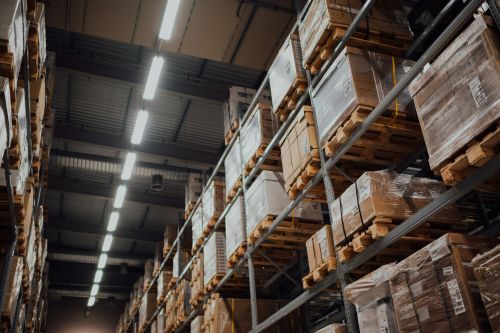
Every warehouse has a visibility gap—the difference between what the system says is on the floor and what is actually there—and most operations have wider gaps than they realize, with costs that compound silently through normal-looking activity. The average warehouse spends 6,500 hours per year on manual cycle counts, the equivalent of three full-time employees counting continuously, year-round, yet by the time count data reaches decision-makers, it is already outdated. The underlying causes are consistent across operations: inventory shrinkage, phantom stock, and location drift, with six percent of total labor costs consumed by inventory the team knew existed but couldn't locate. These hidden costs include wasted labor searching for product, inefficient replenishment cycles driven by what's in the building rather than what's on shelves, and the compound effect of inventory management errors that are rarely captured on a single profit-and-loss report.

What the Super El Niño means for retail


The strongest El Niño weather disruption on record is destined to upset seasonal merchandising plans unless retailers prepare for it, with the phenomenon expected to peak between October and January 2026-2027. Brands that sell apparel for low temperatures or gear for winter sports face vulnerability to a potentially very warm winter, including retailers like Burlington, Deckers, Canada Goose, and VF Corp's The North Face and Timberland brands. Conversely, retailers selling warm-weather apparel and goods stand to benefit from extended warm-season purchasing windows that disrupt traditional fall and winter retail cycles. The largest retail implication may emerge through the food supply chain as El Niño adds a layer of volatility to already pressured commodities, with price impacts expected to reach retail shelves six to twelve months after the event peaks, likely in 2027. Over a quarter of consumers surveyed said that good weather leads them to spend more, and warm temperatures caused by El Niño will seem like good weather to many people.

Flock Backlash Isn't Slowing Real Estate's AI-Driven Surveillance Boom

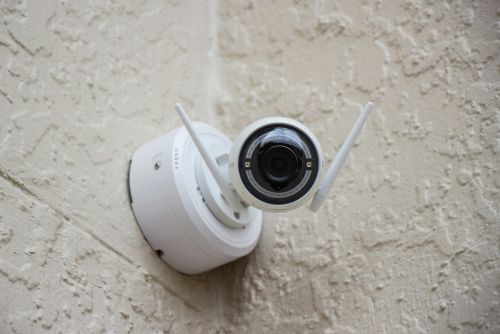
Artificial intelligence-driven surveillance is rapidly expanding across the commercial real estate sector despite facing growing public scrutiny and privacy concerns, with property owners and managers increasingly deploying advanced camera systems and analytics to monitor tenant safety and secure buildings. These sophisticated tools can automatically detect suspicious behavior, unauthorized entry, and potential security threats in real time, significantly reducing the need for constant human monitoring by security personnel and lowering operating costs. Companies like Cloudastructure and Flock Safety are securing major contracts with real estate investment firms, with Cloudastructure recently landing its largest deal to provide exclusive surveillance solutions for a luxury high-rise property in Houston, including 24/7 remote guarding software, smart surveillance cameras, and integrated cloud platforms. Industry advocates argue these technologies are essential for modern risk management, though privacy concerns persist as biometric data collection and omnipresent video surveillance trigger regulatory scrutiny and civil liberties questions.